Tuesday, 1 March 2011

Rodna Mountains - The National park


The Mounts of Rodna preserve, more than all the other mountains of Romania, the traces of the quaternary glaciers.A karstic relief represented by caves like: “Izvorul Tausoarelor” (the Source of Tausoare) or “the gutter of Zalion” (Jgheabul him Zalion) or “the bath of Schneider” (Baia him Schneider).The river of Somes Mare has its source in this solid mass and collects all the small rivers of the western south, the south and the west of the Rodnei Mounts: Cobasel, Valea Vinului, Anies, Cormaia, Rebra, Salauta, with Telcisor, Stramba.


Under the top of Gargalau, it is the river Bistrita Aurie (Bistrita Dorée) which takes its source and moves towards the area of Bucovine.There are also 23 glacial lakes among which: Iezerul Pietrosului, Taurile Buhaiescului, Lala Pond, Lala Mica.

The flora is extremely rich, there are several rare species protected by the law: edelweiss (Leontopodium alpinum), yellow gentian (Gentiana lutea), (Gentiana punctata), angelica (Angelica archagelica), Sangele voinicului (Nigitella will rubra), the yew (Taxus will rubra).
A fauna protected at the international level more than 29 (species of the lépidoptères among which Erebia pharte carpatica.
Birds of big size are found: the grouse (Tetrato tetris),
The cock of heather (Tetrao urogallus), the imperial eagle (Aquila chrysqetos);Among the mammals: the stag carpatic (Cerfus elaphus), the roe-deer (Capreolus capreolus), the marmot (Marmota marmota), the wild boar (Known scrofa), the bear (Ursus arctos), the wolf (Canis lupus), the lynx (Lynx lynx). The marten (Martes martes), the chamois (Rupicapra will rupicapra).


Wednesday, 23 February 2011

Doga College Forest Natural Science Info


In BEYKOZ DOGA COLLEGE FOREST, the plants are formed of exotic ones. And it has Weigela Florida, Potentilla fruticosa, Cotoneaster lacteus, Rhaphiolepis delacourii, Acer palmatum “Atropurpureum”, Tamarix tetrandra, Rosa purpurea, Berberis ottawensis “Superba”, Salix matsudana var, tortuosa…

There are 288 herbal species and 6617 total plant materials.

Tuesday, 22 February 2011

PICTURE FEBRUARY. IES AS TELLEIRAS


This month we can cross the river by this functional bridge. Also offer a very nice view.

Friday, 18 February 2011

KAMPINOS FOREST (Poland) - natural science information


European  Ecological "Nature 2000" Network


UNESCO 
MAB Biosphere Reserves Directory


This biosphere reserve is characterized by a high diversity of lowland habitats 
with dune belts separated by swamp areas and a mixture of forest types.  

The Kampinos Forest includes Europe’s largest area of inland sand dunes, mostly tree-covered and up to 30m high. It’s a strange feeling to have sand between your toes so far from the sea. In the depressions between the dunes there are peat bogs, meadows, and marshes covered with a growth of alder. They shelter much of its animal life. The park's flora abounds in rare protected species. Its wildlife includes such animals as elk, beaver, and lynx. 
 
The Kampinos Forest is inhabited by about 250 elks, a few hundred boars, 200 species of birds, 100 beavers and 10-15 lynxes.  Recently the Kampinos National Park has seen the return of the red deer and the white-tailed eagle, and the population of storks and cranes has grown too. 

Elks, beavers and lynxes live in the park but are hard to spot; you are more likely to see other animals such as hares, foxes, deer and, occasionally, wild boars. The park is home to some bird life, including black storks, cranes, herons and marsh harriers.


The Kampinos Forest is a mixture of forest types (bog-alder forest, ash-alder flood plain forest, pine-oak mixed forest and low oak-lime-hornbeam forest). 

Major ecosystem type:  
Temperate broadleaf forests or woodlands

Its flora is rich with around 1245 species of plants, of which 69 are protected. A plant curiosity is a small shrub – Leatherleaf (Chamaedaphne calyculata) – a relic of ice age.

 by Paweł and Adam


Tuesday, 8 February 2011

ENGLISH CLASS ACTIVITY IES AS TELLEIRAS

Last day our teacher brought us a text of the animals and plants of the "Fragas do Eume". Mercedes told us that we had got five minutes to read the text and to memorize all the things we could about the text because we would play a game.
In the memory game we needed to memorize tha description of ten animals and then match the names with definitions. After that we read the text with the animals descriptions. The text describes the fragility of the ecosistems in the Fragas. There are a lot of animals in danger like the Geomalus maculosus, the dormouse and peregrine falcon. This text is to make people aware about that especial enviroments which are disappearing.

(Roberto, Adrián, Antía, Noelia, Andrea, Dani, Illary, Óscar and Marta)
Thanks to Mercedes. Our teacher

Saturday, 5 February 2011

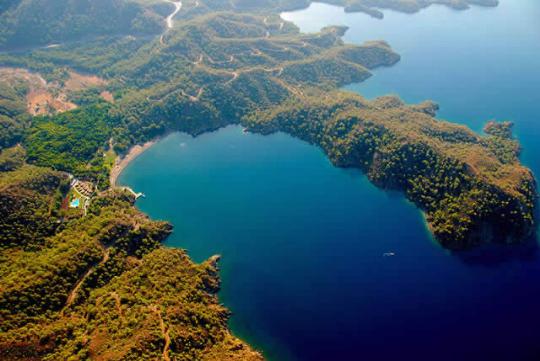
The Sığla Forests in Dalaman/Turkey


When you take a tour in our region,the Sığla Forests can be seen at the seaside and the trees are generally seen near the rivers and beaches in Dalaman and in other cities ,located at the south west of Turkey.There are seasides which are full of Sığla trees.with the blue sea and this beautiful trees creates a wonderful natural view for its visitors.This forest are very precious and they are in danger so theGoverment and Enviroment Organizations try to protect this forests.and We hope the next generations will be able to see Sığla trees in the next years.